
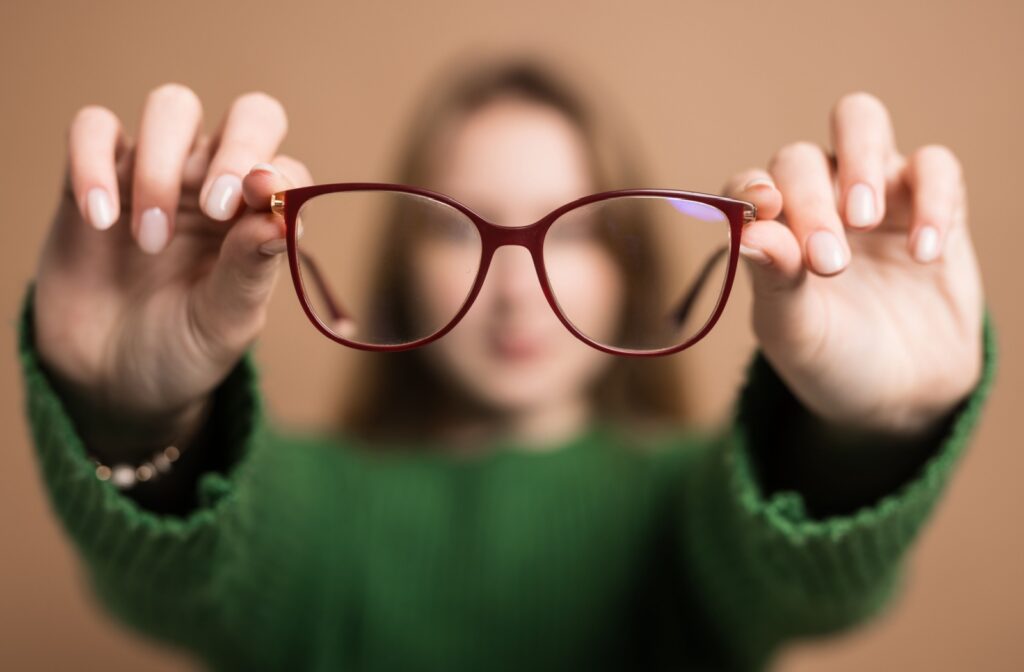
You might notice yourself squinting to read a road sign, or perhaps your child mentions that the board at school looks fuzzy. Blurry vision is a common experience, but what does it actually mean? It often points to a refractive error—a simple term for when your eye doesn’t focus light correctly.
Understanding your vision starts with knowing the difference between conditions like myopia and hyperopia. The key distinction between these two conditions is whether you struggle to see things that are far away or things that are up close. Getting to know these terms can help you have a better conversation about your eye health and understand the signs that you might need glasses.
A Simple Look at Myopia or Nearsightedness
Myopia, often called nearsightedness, is a common vision condition. It means that you can see nearby objects clearly, but objects that are farther away look blurry. This happens when the shape of your eye causes light to focus in front of your retina (a tissue at the back of your eye) instead of directly on it. Myopia is a leading cause of distance vision impairment in children and adults.
Common Signs of Myopia
- Finding it hard to see distant objects, like road signs or a presentation screen
- A need to squint or partially close your eyelids to see clearly
- Headaches that come from eyestrain
- Eyes that feel tired or strained
A Simple Look at Hyperopia or Farsightedness
Hyperopia, or farsightedness, is the opposite of myopia. With this condition, you can usually see distant objects well, but you may have difficulty focusing on things that are up close. In cases of significant hyperopia, the eyes must work harder to maintain clear focus, which can lead to strain.
Common Signs of Hyperopia
- Close-up objects may appear blurry and with significant hyperopia, the distance vision can also be unclear
- A need to squint to see things clearly
- Eyestrain, which can include burning eyes or an ache in or around them
- Headaches after close-up tasks like reading, writing, or computer use
Myopia vs. Hyperopia: Key Differences
While both conditions are types of refractive errors, they affect your vision in opposite ways. The main difference is all about where you see clearly, up close or far away.
How Your Vision Is Affected
With myopia, the visual focus point falls in front of your retina, which makes distant objects look out of focus. With hyperopia, the focus point lands behind the retina. This often makes near objects blurry and can require your eyes to work harder to see clearly.
Is One Condition Worse Than the Other?
Neither condition is “worse” than the other; they are simply different types of vision issues. Both can be addressed effectively with corrective lenses. The right type of eyeglass lenses for you depends on your eyes, prescription, and lifestyle needs.
What About Astigmatism?
Sometimes, a condition called astigmatism occurs alongside myopia or hyperopia. Astigmatism is due to an irregular curve in your eye’s cornea or lens. In other words, an astigmatic eye is shaped more like a football than a baseball. Astigmatism can cause your vision to be blurry or distorted at all distances, not just near or far.
How We Spot Vision Issues in Kids & Adults
Regular eye exams are a straightforward way to detect myopia, hyperopia, and other vision conditions. A comprehensive check-up helps your optometrist determine what kind of prescription you or your children might need.
At What Age Is Hyperopia Diagnosed?
Hyperopia is often present at birth and can be detected during early childhood eye exams. Many children can naturally accommodate small amounts of farsightedness without issues. A professional eye exam can assess whether vision correction is needed to support a child’s visual development.
Your Options for Clear Vision
If you have a refractive error, there are simple and effective ways to help you see more clearly. Your optometrist can talk with you about options that fit your daily life and personal preferences. The goal is always to find a comfortable and practical solution.
Glasses & Contact Lenses
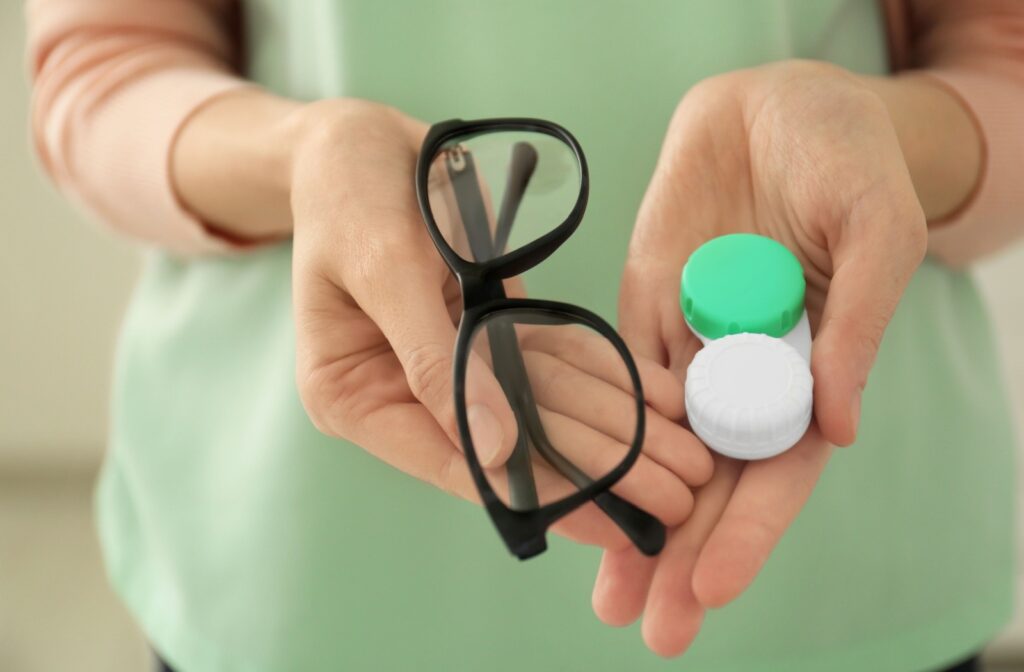
Prescription glasses and contact lenses are the most common ways to correct vision for both myopia and hyperopia. They work by refocusing light correctly onto your retina, giving you clear vision. With so many styles and types available, you can find a pair that feels right for you.
Can Myopia Be Reversed?
While there isn’t a way to reverse the physical changes in the eye that cause myopia, the condition’s progression can often be slowed in children and teens. Our team can discuss options for vision correction and management with you during an appointment.
Whether you’re curious about your own vision or your child’s, understanding common vision conditions is the first step toward clarity. If you’ve noticed any changes in your sight, we’re here to help. Our team at Calgary Family Eye Doctors is dedicated to providing warm and accessible care for your entire family, so please reach out to schedule an appointment.