

Key Takeaways
- Vitamin A, C, E, zinc, lutein, zeaxanthin, and omega-3s all support your eye health.
- Leafy greens, colourful produce, fish, nuts, and egg yolks deliver these nutrients.
- Food comes first, and supplements work as a backup when your diet falls short.
- Vitamins can slow some changes, but they cannot reverse vision loss.
- Regular exams help you catch problems early.
The Right Nutrients Help Maintain Healthy Vision
You spend hours each day looking at screens, and by evening your eyes feel dry and tired. You wonder what you can eat or take to keep your vision sharp for years to come.
Our team at Calgary Family Eye Doctors hears this kind of question often. A handful of everyday nutrients can support your eye health and help slow certain age-related changes, especially when these nutrients come from the food on your plate.
Vitamins & Nutrients for Healthy Eyes
Vitamins & Zinc
Vitamin A keeps the surface of your eye moist and helps you see in low light, while Vitamins C and E act as antioxidants, which means they help protect the delicate cells in your eyes from everyday wear. Zinc plays a quiet supporting role too, since it helps move vitamin A into the retina where you need it.
Lutein & Zeaxanthin
These two nutrients are antioxidants that accumulate in your retina, where they work to absorb light. They may help with conditions like macular degeneration, cataracts, and diabetic retinopathy.
Omega-3 Fatty Acids
Omega-3s help support a healthy retina. They may also help calm the gritty, dry feeling you get after staring at a monitor without blinking enough.
Foods That Give Your Eyes These Nutrients
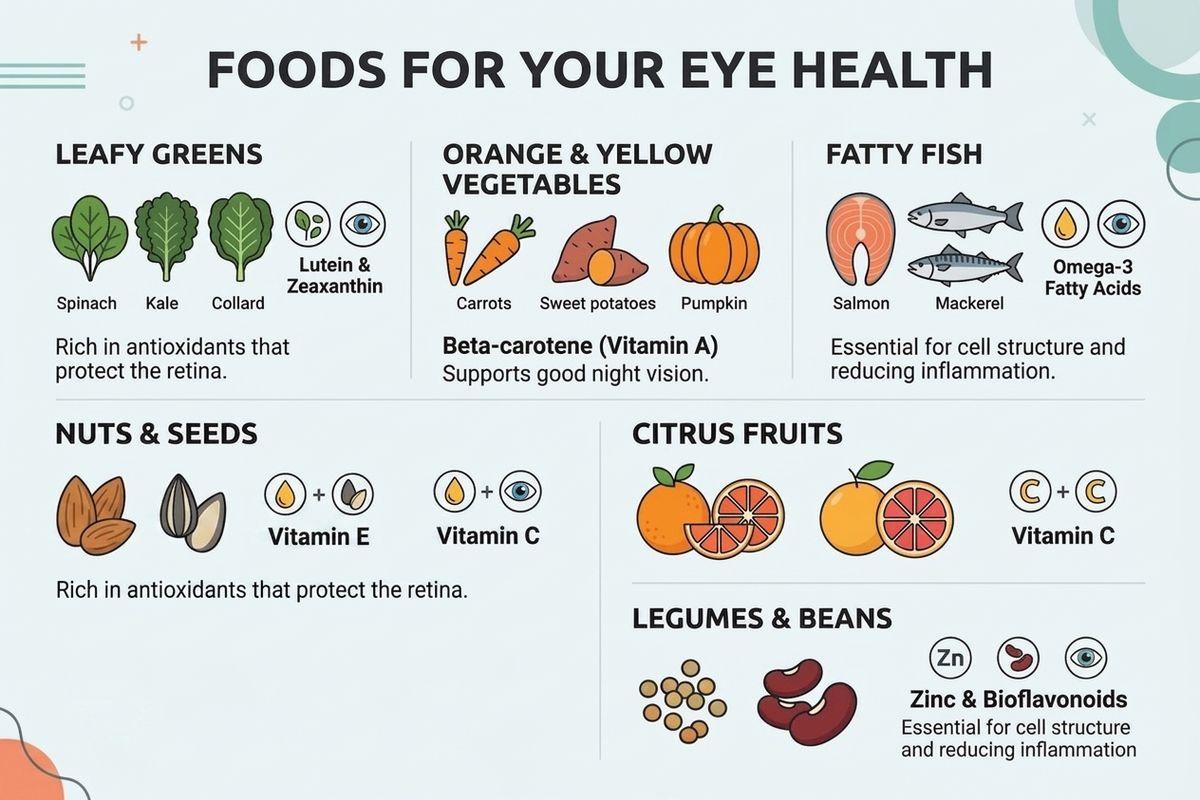
You can cover most of your bases with a colourful plate. Mix a few of these into your week, and your eyes will get a steady supply of what they need.
- Leafy greens like spinach, kale, and collards for lutein and zeaxanthin.
- Colourful produce like carrots, peppers, and oranges for vitamins A and C.
- Fish, nuts, seeds, and egg yolks for omega-3s, vitamin E, and zinc.
The Truth About Carrots
Carrots earn their reputation thanks to beta carotene, which your body turns into vitamin A. Still, a bag of carrots won’t hand you super night vision. They simply help your eyes do the job they already do.
How These Nutrients Help Protect Your Vision
Good nutrition won’t fix or prevent every possible problem, but it can help keep your vision healthy. Here are some areas where a good diet can have a substantial effect.
Age-Related Macular Degeneration
For some people already living with macular degeneration, a blend of nutrients called the AREDS2 formula may help manage the conditions. However, AREDS2 has very high levels of vitamins, so it should only be used on the advice of your eye care professional.
Cataracts and Eye Strain
Antioxidants like vitamins C and E are linked to the long-term health of the lens inside your eye. Omega-3s, meanwhile, may bring comfort to eyes that feel tired and dry after a full day in front of a screen.
Supplements Versus a Balanced Diet
Your body tends to absorb nutrients from food more easily than from a pill, so treat meals as your foundation. A supplement can fill a gap when your diet runs short, but more is not better.
- Reach for food first, and use supplements only as a backup.
- Stay within 100 percent of the Daily Value unless advised otherwise by a professional.
- Remember that vitamins cannot reverse vision you’ve already lost.
Vitamins to Keep Separate
Some nutrients compete with each other. For instance, high doses of zinc can lower how much copper your body absorbs over time. Our team can help you sort out safe pairings before you start anything new.
Daily Habits to Keep Your Eyes Healthy
Small choices add up across the years. Build a few of these habits into your routine to help protect the health of your eyes:
- Eat about five colourful servings of fruits and vegetables each day.
- Wear UV-blocking sunglasses outdoors.
- Skip smoking.
- Book regular exams with the Family Eye Doctors in Calgary.
When to See Our Team
If you’re experiencing blurry vision, have developed new vision problems, or have a family history of eye conditions like macular degeneration, it’s always worth booking an appointment.
Our team at Calgary Family Eye Doctors can review your diet, talk through supplements, and check your vision in plain, friendly terms. Book your next eye exam today and keep your sight working for the long haul.