
Key Takeaways
- Myopia, or nearsightedness, means distance vision looks blurry while close-up vision stays clear.
- Hundreds of genes have been linked to myopia, and risk rises when 1 or both parents are nearsighted.
- Daily habits, including long stretches of close-up work and limited outdoor time, also play a role.
- Myopia often begins during the school years and tends to settle in the late teens or early 20s as the eyes stop growing.
- Regular eye exams and myopia control treatments, including specialty glasses or contact lenses, can help slow progression in many children.
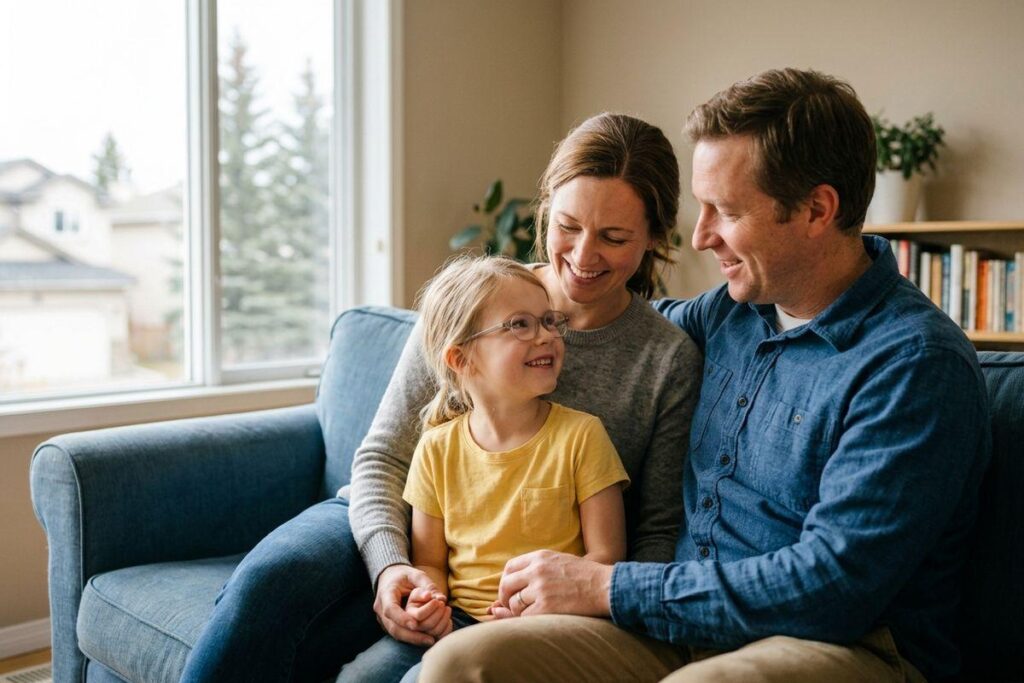
Maybe you noticed your child squinting at the whiteboard, sitting closer to the TV, or holding a tablet a few centimetres from their nose, so you took them for an eye exam. Your optometrist confirms it: They’re nearsighted, just like you were at that age. Our team at Calgary Family Eye Doctors is often asked about whether myopia can be passed down by parents, and we’re here to answer that question.
Myopia does have a genetic link, and a family history of nearsightedness raises the chances that a child develops it, though genes are only part of the picture.
What Myopia Is and Why It Happens
Myopia means distance vision looks blurry while objects up close stay sharp. Street signs may look fuzzy, and faces across a room may be harder to make out, but reading a book is no problem.
Myopia most often happens when the eye grows too long from front to back, which causes light to land just in front of the retina (at the back of the eye) instead of directly on it. Myopia usually shows up during childhood, and because children’s eyes are still growing, their prescription can keep getting stronger.
The Role of Family History in Myopia
Researchers have identified hundreds of different genes associated with nearsightedness. That’s a big part of why myopia doesn’t follow a tidy, predictable inheritance pattern the way some traits do. For example, 2 nearsighted parents can have a child with clear distance vision, and 2 parents with no history of myopia can have a child who needs glasses.
When 1 parent is nearsighted, a child’s risk goes up. When both parents are nearsighted, it rises even more.
Genes Passed Down from Parents
If you’ve worn glasses since elementary school, it’s reasonable to watch your own child for signs of a vision problem a little more closely. Knowing your family history gives the eye doctor useful information at your child’s first exam, and it can shape how often they suggest coming back.
Why Rates Differ Across Populations
Myopia rates aren’t the same everywhere. They vary between populations and regions, which points to something beyond genes alone. Where children live, how they spend their days, and how much time they spend indoors all factor in, which is why 2 children with similar family histories can end up with very different prescriptions.
How Daily Habits Affect Myopia
Genes set the stage, but everyday routines matter too. A few habits come up again and again in conversations about myopia in kids, including:
- Long, uninterrupted stretches of close-up work like reading or homework
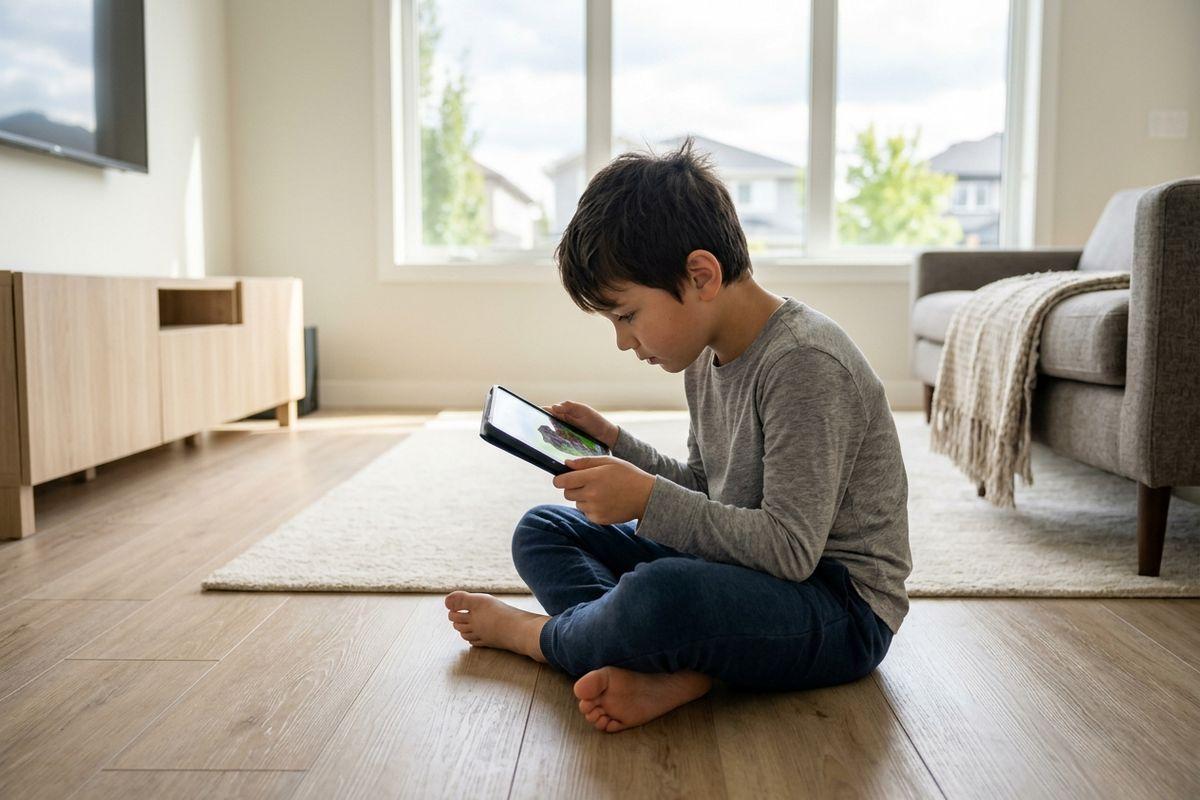
- Screens held close to the face for hours at a time
- Limited time spent outdoors
These habits have been associated with an increased risk of myopia in children.
Near Work and Screen Time
Between homework, novels, phones, and tablets, kids spend more of the day focused on things within arm’s reach than they used to. Myopia has been linked to those long stretches of near work. Short breaks throughout the afternoon are important for giving young eyes a chance to look up and focus far away.
Outdoor Time
Time spent outside is one of the most important habits to encourage in children. More outdoor play is associated with a lower risk of myopia in children, which makes an afternoon at the park or a walk along the river pathway genuinely useful, not just fun. Aiming for 1 to 2 hours outside each day can be a good general guideline.
When Myopia Starts and When It Slows Down
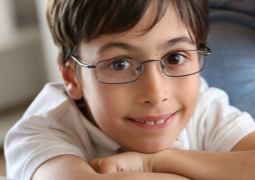
Babies aren’t usually born nearsighted. Myopia tends to appear once the school years begin, often between ages 6 and 12, and the prescription can change noticeably from 1 year to the next during that time.
For many people, myopia stabilizes in the late teens or early 20s, when the eye slows or stops growing. That’s why the childhood years get so much attention. It’s the window when changes happen quickly, and the window when management options can help slow progression.
Ways to Slow Myopia Progression in Kids
You can’t change your child’s genes, but you can act on the factors within your control. At Calgary Family Eye Doctors, we offer myopia control lenses that can help slow the rate of myopia progression in children. Regular eye exams are also helpful for tracking how their prescription is changing over time, so we can stay on top of any shifts.
What to Expect at a Kids’ Eye Exam
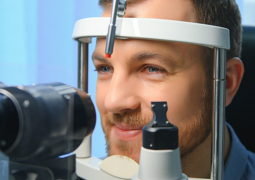
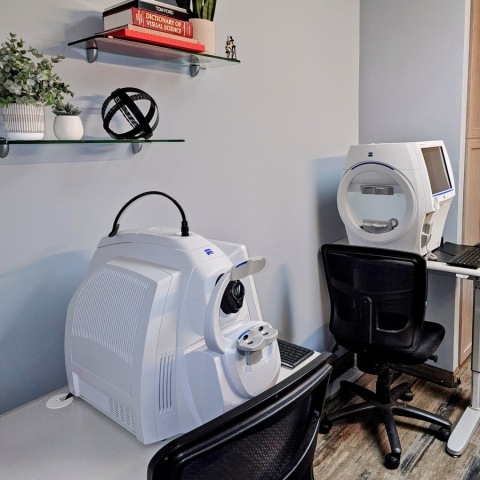
A children’s eye exam checks far more than whether your child can read letters on a chart. Our optometrists looks at how the eyes work together, measures their prescription, and examines overall eye health. The whole process is designed to be simple, and some children even find it fascinating.
Myopia Management with Eye Doctors in Calgary
Myopia management focuses on slowing how quickly a child’s prescription changes. Our eye doctors in Calgary can review your family history, your child’s daily routine, and their current prescription, then talk through which approaches suit your family.
Schedule Your Child’s Visit
Our team at Calgary Family Eye Doctors is happy to answer your questions and help you build a plan around your child’s vision. Whether you’re curious about myopia management for your child or it’s time for their first eye exam, we’d love to see them. Book an eye exam today.